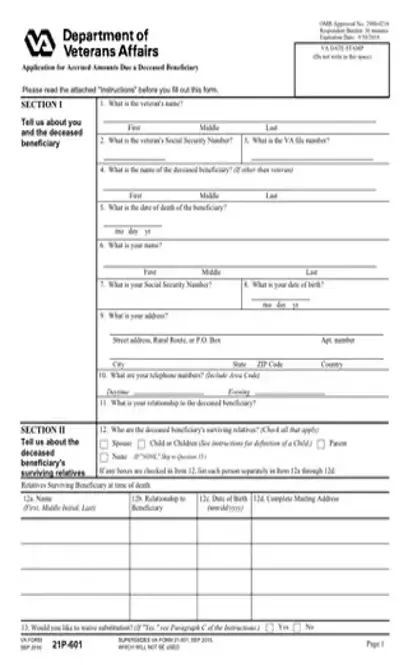
If a veteran dies without being paid their accrued benefits, the benefits will be transferred to their dependents following a law-established line of succession. These are the rules for the sharing of benefits:
For circumstances where the deceased is a veteran:
Accrued sums could be paid in full to a surviving spouse, or
Accrued sums could be paid in full to a surviving spouse, or
Accrued sums could be given in equal shares to each of the veteran’s children
Accrued sums could be given in equal shares to each of the veteran’s children
If there’s no spouse or children, shares might be given equally to the veteran’s parents, provided the parents were dependent upon the veteran when the veteran died
If there’s no spouse or children, shares might be given equally to the veteran’s parents, provided the parents were dependent upon the veteran when the veteran died
If none of these circumstances are met, the full amount might be given to the other surviving parent, provided they were dependent upon the veteran’s income when the veteran died
For circumstances where the deceased is a veteran’s surviving spouse:
Accrued benefits will be shared equally between each of the veteran’s children
When the deceased is a child:
Accrued benefits are divided equally between children of the veteran who meet eligibility requirements for death compensation, indemnity and dependency compensation, or a death pension
Under the law, a “child” refers to an unmarried child who is under the age of 18. If they’re going to college, they can be over 18 years old, but they must be less than 23. If any children are permanently disabled or otherwise unable to support themselves, they can count as a dependent regardless of their age.
With all of this said, if there are lump sum benefits accrued, all children will be considered recipients regardless of whether they’re dependents or not. This means that adult children and married children are also entitled to shares.