Defamation Cease and Desist Letter Template
Stop searching and find out why people love the ease of creating beautiful and legally compliant Defamation Cease and Desist Letter with PDFSimpli.
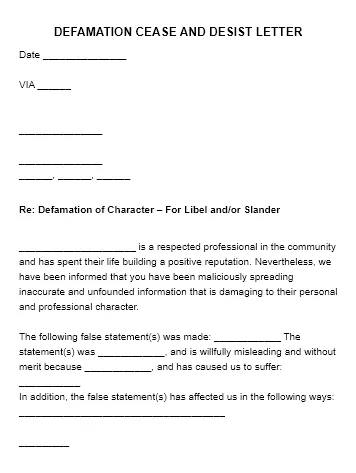
Stop searching and find out why people love the ease of creating beautiful and legally compliant Defamation Cease and Desist Letter with PDFSimpli.

Pick from the colors and templates below
A defamation cease and desist letter threatens legal action against people or businesses spreading lies about you or your company. The letter warns them to stop immediately or face the consequences. Defamation can’t land them in jail, but you can sue the offending party for monetary damages. This type of document is also known as a libel and slander cease and desist letter.
Libel is when a defamatory statement appears in written form. One example would be an article that falsely claims a competing business uses child labor. Libel includes books, newspaper articles, online content and other avenues. Spoken defamation is called slander. It can involve false news stories, videos and even conversations. For example, if a competitor visits your clients and accuses you of stealing money, intellectual property, committing fraud, or other harmful statements, this is slander.
Some false statements are clearly defamatory. These include lies about someone being involved in a crime, engaging in shocking sexual behavior, having a dangerous and contagious disease, or doing something that is unfit for a professional. These false accusations harm the victim’s reputation. For example, if a former patient purposely spreads lies that a doctor performs operations while intoxicated, this could have a negative effect on the doctor’s medical practice. In all of these situations, you can use a defamation cease and desist letter.
If the opposing party is spreading lies about you or your company, use a defamation cease and desist letter to persuade them to stop. This type of situation is more common in business situations, where competitors may try to harm your company by damaging your local reputation. Sometimes, angry ex-employees or unhappy customers resort to defamation as a way of “getting back” at your company. With a defamation cease and desist letter, you warn the other party that you’re prepared to take legal action if the problem continues.
By using a defamation cease and desist letter, you can likely get the individual or business in question to remove the offending article or set the record straight. This can stop lies from spreading about you or your company. Few businesses or news outlets want to go through the hassle of having you take them to court, so they often make changes quickly to the content.
It’s not a good idea to allow defamation to go on unchecked. After all, it damages your business’s reputation, causing you to lose real profits if customers choose a competitor instead. Also, being lied about can cause hurt feelings, stress, depression, relationship problems and other negative effects. A defamation cease and desist letter is one of the most important legal avenues for making the problem stop.
The layout of a defamation cease and desist letter is fairly simple. However, it’s important to take your time to fill in each section correctly. You need to communicate to the recipient exactly what statements you object to and what you want done about it. For example, you can demand that the offending article or social media post be taken down right away. If you want to take things a step further, you can ask for a public retraction or apology from the person responsible. Here are the main details in a cease in desist letter:
Before you start writing a defamation cease and desist letter, think about how to describe the defamatory comments as clearly and briefly as possible. Decide what action you want the person or business to take. You may also need to look for the name of the person who wrote the article or posted the video.
It’s easier to create a cease and desist letter when you use an online template. These documents usually come in PDF format. To fill them in, edit them, print them out or send them electronically, you need a good PDF editor. PDFSimpli is a popular choice because it’s one of the easiest online PDF editors to use. Also, it’s available right from your browser (on PC, android or Apple devices) so you don’t need to download or install any programs.
There aren’t many areas you need to fill in with this type of cease and desist letter, so creating it doesn’t take long with PDFSimpli. First, click on the Add Text Button, select an open box and type in the information related to your defamation issue. If you want to attach a photo as evidence, click on the Add Image Button and select the file from your computer. Click on the screen to place the image. You can also add videos or audio files to your PDF with the Add File Tool.
After you’re finished writing, read the form one last time. Make sure the tone is professional yet serious. Don’t use insults or resort to threats. That way the document is more likely to have the desired effect.
When you’re satisfied with your finished defamation cease and desist letter, click on the Save Button at the top of the screen. From here, you can download, print or request an e-signature for the document. You’re ready to deliver the form right away.
Social media posts that accuse someone falsely are considered libel, a type of defamation. Libel also includes knowingly posting false online reviews that contain serious accusations. You’re well within your rights to use a defamation cease and desist letter in these cases.Of course, it’s important to understand the difference between personal opinions and defamation. People can write social media posts saying they hate your business, but that’s just their opinion, not defamation. Making false claims is something completely different and far more serious.
The first step in stopping libel or slander is to send a defamation cease and desist letter. This letter will make it clear to people or businesses that you take the false accusations very seriously. Next, see what other avenues you have. Many social media websites such as YouTube and Facebook take down defamatory videos or posts that are reported. If that doesn’t work, you can contact a lawyer to get a judge to issue a cease and desist order that forces the offending party to remove the content. If you go to court, you can also sue for damages.
The laws for proving libel or slander vary from state to state, but there are four main things to look for: The statement must be false, damaging, reckless and public. If you decide to sue, you have to provide proof of these four things. This would usually mean having copies of the original article, social media feed, news broadcast or other place that spread falsehoods about you or your business. You would also have to show how the negative comment harmed you, perhaps by costing you your job or making your business lose customers.
Select Language





© 2026 , WorkSimpli Software, LLC. All rights reserved.