SSA-1696-U4 PDF Template
Stop searching and find out why people love the ease of creating beautiful and legally compliant SSA-1696-U4 PDF with PDFSimpli.
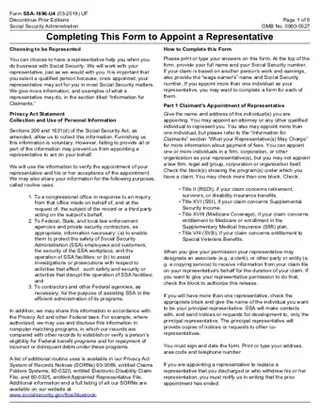
Stop searching and find out why people love the ease of creating beautiful and legally compliant SSA-1696-U4 PDF with PDFSimpli.




[toc] When you do business with the Social Security Administration, you have a right to choose a representative to help you. The administration will then work with this appointed representative, just like they’d work with you. The Form SSA-1696 is used to appoint an official representative to act for you in matters related to Social Security.
You are legally entitled to have a representative work with the Social Security Administration in your stead. Many people choose to use this option for a variety of reasons. First of all, Social Security proceedings tend to involve a great deal of paperwork. Secondly, it can sometimes be helpful to have a legal representative who understands the ins and outs of the Social Security Administration.
Most people choose to use an attorney as their representative, but any other qualified person can also act as a person’s representative. You have the right to appoint multiple individuals, but you may have to pay additional fees if you hire multiple people. It’s also important to note that the representative or representatives must be individual people. Multiple representatives might come from the same law group, but they need to be individually named. The law firm or organization cannot act as your representative by itself.
This is the main form you’ll use if you want to appoint a paid representative. After the form is filed, this representative will be authorized to make decisions for you with the Social Security Administration. They’ll be responsible for procuring the paperwork necessary for your initial claim or for your appeal. They’ll also be responsible for gathering relevant documents held by other agencies. If you authorize them to do so, they might use a clerk to gather these documents.
This form is generally completed by two main parties: the claimant and their paid representative. If the claimant wishes for multiple paid representatives to help with their claim, the one listed on this form must be the principal representative. Rather than the SSA sending documents to all representatives, they will send them to the principal representative, who will then make copies for the other representatives.
The claimant is any person who is filing a claim with the Social Security office. This an include both initial claims and claim appeals. All claims processed through the Social Security office are eligible, including:
Retirement benefits
Disability insurance benefits
Surviving spouse benefits
Supplemental security income benefits
Medicare enrollment and enrollment in the SMI (Supplementary Medical Insurance) plan
Entitlement to special veterans benefits, as long as these benefits are handled through the SSA rather than the VA
The representative is the person that the claimant wants to represent them with the SSA, most commonly their attorney. This representative will accept responsibility for making sure the correct forms are filed, notices are sent, and meetings are attended.
It’s recommended that people authorize a trusted representative to take care of most Social Security claims. The process of gathering documentation, filing it, going to meetings, providing supplemental proof, and making final comments can be exhausting. It is also often time-consuming, and many claimants simply don’t have the time to file all the paperwork.
Sometimes, there will be deadlines associated with different forms on a claim. Failure to meet those deadlines could result in a reduction of benefits, or in the claim being thrown out entirely. An attorney can make sure all due dates are met, and that the filing process happens in as timely a fashion as possible.
If you don’t fill out this form, you won’t be able to have a paid representative represent you during your claim. This is the form that the SSA uses to understand what representative you’re looking for. After filing is complete, the SSA will reach out to this representative for all further required documentation. The representative will only contact you if they need information you have.
Both the claimant and the principal representative are responsible for filling out their respective parts of the form.
At the very top of the form, the claimant’s name should be typed along with their Social Security number. If the wage earner who supports the claimant is different from the claimant, their name and SSN should be printed on the second line.
Part 1 should be filled out by the claimant. On the first blank line, they should print the full name of the individual. They should also check the box beside the type of claim they’re filing: SVB-related, Medicare-related, SSI-related, or RSDI-related.
This authorizes the representative to give notice, request information, and receive notices about your claim. You will need to check the box authorizing the SSA to release pending claim information to the representative’s clerks, partners, or other parties who require the information due to the representative’s contracts.
If you’re appointing multiple representatives, check the box indicating so, and write your principal representative’s name. Then give your signature, address, telephone number, and date.
Part 2 will be completed by the attorney. You need to check whether you’re an attorney, a non-attorney eligible for direct pay, or a non-attorney who does not meet direct payment eligibility requirements. You’ll also have to check the appropriate box for the next two questions.
Sign and date the form. Provide your address and the telephone number at which you can be reached.
The representative also fills out Part 3 by checking the box relevant to the fee arrangement they have made with the claimant. This section ends with another representative signature and date.[pdf-embedder url=”https://cdn-prod-pdfsimpli-wpcontent.azureedge.net/pdfseoforms/pdf-20180219t134432z-001/pdf/form-ssa-1696-u4.pdf”]
There isn’t a limit, but a person must choose one individual to be their principal representative. Additionally, all representatives must be individuals.
A law firm itself can’t act as representative, but individual people working at the law firm can.
If you’re paying them for their representation, this is the form you’ll use. Otherwise, you’ll want to file different documentation.
Select Language






© 2026 , WorkSimpli Software, LLC. All rights reserved.